

buy glass panels
Understanding Internal Bore Gauges Precision Tools for Measuring Diameter Internal bore gauges are essential tools in various manufacturing and mechanical engineering applications, specifically designed to measure the internal diameters of cylindrical objects accurately. These precision instruments play a crucial role in ensuring component quality and interoperability in assembly processes. This article will delve into the purpose, types, advantages, and best practices when using internal bore gauges. Purpose of Internal Bore Gauges Internal bore gauges are primarily used to measure the diameter of holes, pipes, and tubes within parts. Unlike external calipers or micrometers that gauge outer dimensions, bore gauges specialize in obtaining measurements from inside surfaces. Accurate measurement of internal diameters is vital in various industries, including automotive, aerospace, and manufacturing, where precise tolerances are necessary for parts to function correctly and fit together seamlessly. Types of Internal Bore Gauges There are several types of internal bore gauges, each designed for specific measurement needs. 1. Mechanical Internal Bore Gauges These gauges use a mechanical setup, usually with a dial indicator for reading the measurement. They consist of a pair of contact points that expand to fit against the bore walls. The user must manually adjust the tool and read the measurement on the dial. 2. Electronic Internal Bore Gauges With advancements in technology, electronic bore gauges have emerged, offering digital readouts and enhanced accuracy. These are especially valuable in high-precision applications, as they can often provide more detailed measurements and are easier to read than mechanical gauges. 3. Tapered Internal Bore Gauges These are specialized tools that can measure tapered bores. The gauge can be set to measure at varying diameters along the taper, providing a comprehensive profile of the internal dimensions. 4. Flexible Gauge Systems Some gauges use a flexible measurement probe that can accommodate irregular bore shapes or specific configurations, offering versatility in measurement applications. Advantages of Using Internal Bore Gauges The use of internal bore gauges provides several significant advantages internal bore gauge - Precision These gauges allow for extremely accurate measurements, ensuring that components meet stringent design specifications. - Reliability Regular use of bore gauges can help ensure consistent quality control, leading to fewer defects and improved product reliability. - Ease of Use While some gauges may require a learning curve, many modern bore gauges are designed for user-friendliness, making them accessible even for those with less experience. - Adaptability Internal bore gauges can be adapted for various applications, making them suitable for different industries and types of measurements. Best Practices When Using Internal Bore Gauges To obtain the best results from internal bore gauges, several best practices should be followed 1. Calibration Always ensure that the gauge is properly calibrated before use. Routine checks can help maintain measurement accuracy. 2. Proper Technique Familiarize yourself with the right technique for using the gauge, including how to position it inside the bore and how to apply consistent pressure. 3. Environment Perform measurements in a controlled environment to minimize the influence of temperature and humidity, which can affect the gauge and the part being measured. 4. Regular Maintenance Keep the gauge clean and in good working order, checking for wear or damage that could affect its accuracy. In conclusion, internal bore gauges are indispensable tools for precise measurement of internal diameters in various applications. Their ability to aid in ensuring component quality makes them vital in many industries. By understanding the types, advantages, and best practices associated with these tools, manufacturers and engineers can significantly enhance their quality assurance processes, leading to superior products and improved performance.
about
buy glass panels
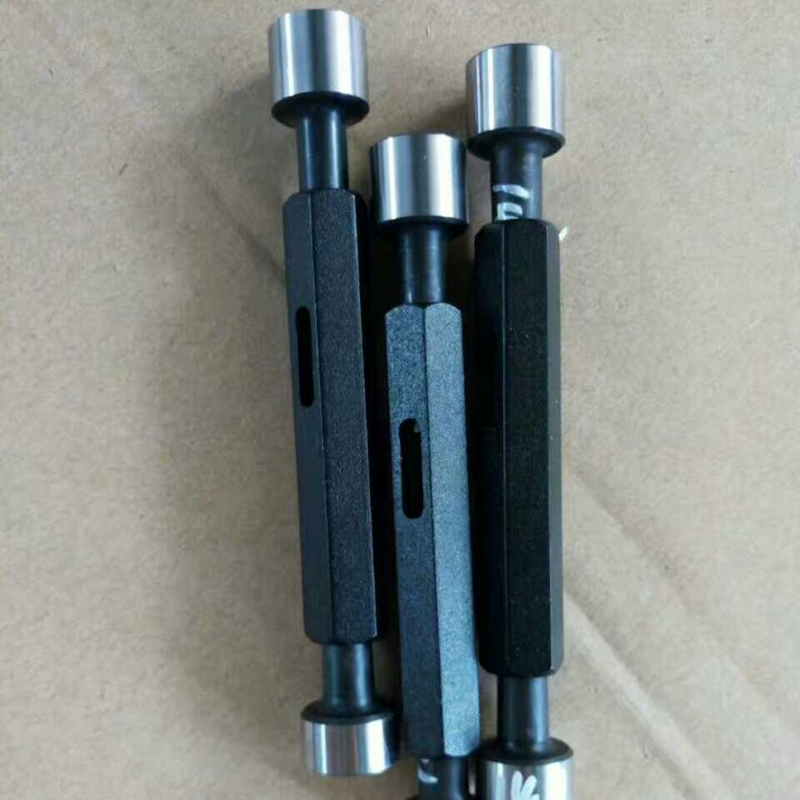
Understanding Ring Gauge and Plug Gauge Measurement Tools In the realm of precision engineering and quality control, the use of measurement tools such as ring gauges and plug gauges is essential for ensuring that manufactured components meet stringent tolerances and specifications. These tools play a critical role in various industries, including automotive, aerospace, and manufacturing, where precision is paramount. Ring Gauges A ring gauge is a cylindrical tool designed to measure the external diameter of a workpiece. Typically made of hardened steel, ring gauges are precision-engineered to ensure accuracy. There are two main types the go gauge and the no-go gauge. The go gauge is used to check if a workpiece's diameter is within the specified tolerance, indicating that it is acceptable and can be assembled into the final product. Conversely, the no-go gauge checks for oversize defects; if the workpiece fits onto the no-go gauge, it is deemed unacceptable. This simple yet effective system allows for quick and reliable measurement, significantly reducing the risk of assembly failures. ring gauge plug gauge Plug Gauges Plug gauges, on the other hand, are used to measure the internal dimensions of a hole or cavity, such as bore diameters. Similar to ring gauges, plug gauges consist of a go and no-go pair. The go plug is designed to fit into the hole when the diameter is within the specified limits, while the no-go plug should not fit if the hole is within tolerance. Plug gauges serve as a vital tool for ensuring the accuracy of drilled holes in various components, thereby enhancing the overall quality and reliability of the final product. Conclusion Both ring gauges and plug gauges exemplify the importance of precision in manufacturing and quality assurance processes. By employing these tools, companies can achieve higher efficiency, reduce waste, and ensure that components meet the necessary specifications. Their straightforward design and reliable function make them indispensable in industries where precision engineering is a necessity. As technology evolves, these traditional tools continue to be relevant, forming a foundational aspect of modern quality control and assurance practices. Their role in maintaining standards cannot be overstated, as they not only enhance product quality but also contribute to the safety and reliability of the final output.
-

High quality industrial productsagement

High quality industrial products
View Details -

Meet the diverse needs of customers

Meet the diverse needs of customers
View Details -

Strict quality control

Strict quality control
View Details -

Top raw materials

Top raw materials
View Details -

Trusted supplier

Trusted supplier
View Details
Our application


news and information
ventil metall
Valvemetaller En Djupdykning i deras Egenskaper och Användningar Valvemetaller är en viktig klass av

Ventil s klapkou 50 mm pro optimální regulaci průtoku vody
Klapka s průměrem 50 mm Klíčový prvek v regulaci toku Klapky jsou nezbytnou součástí mnoha průmyslov
Válvulas de compuerta y válvula de cierre
Las válvulas de compuerta (gate valves) y las válvulas de globo (globe valves) son dos tipos de válv
 English